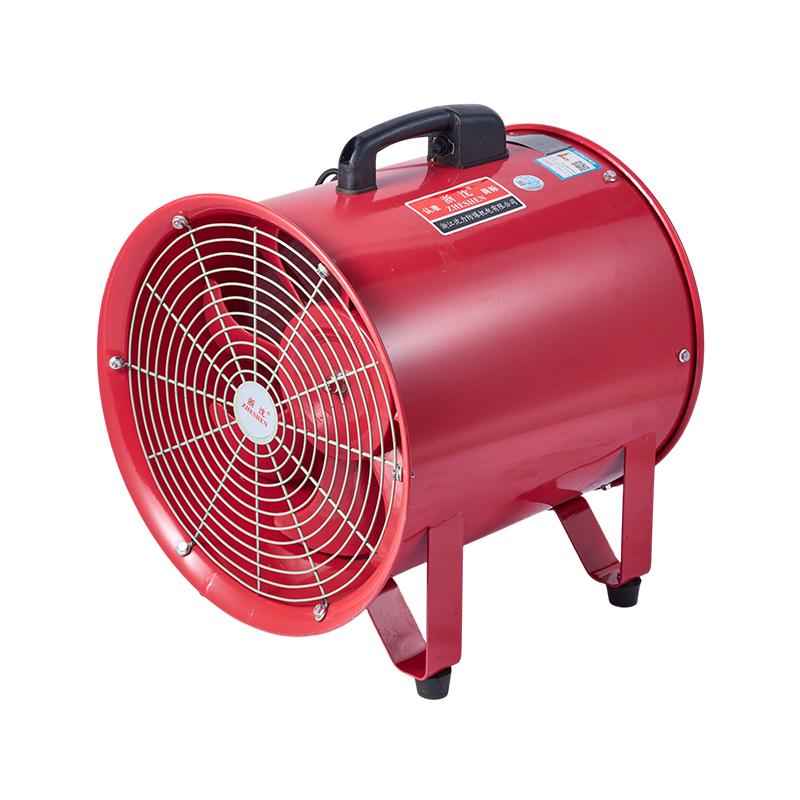
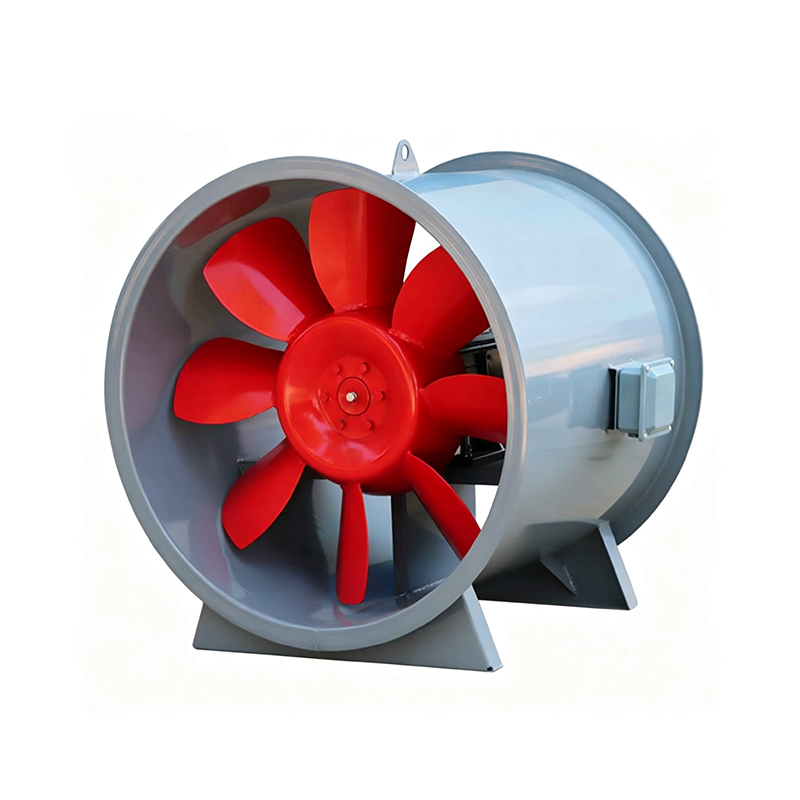
The CTF series low-noise axial flow fan represents a new generation of low-noise ventilation product...
+ VIEW MOREIndustry News

An industrial fan quotation may highlight airflow while another highlights pressure or motor power. Those figures are difficult to compare if the proposals are not based on the same operating requirement.
For an industrial centrifugal fan or another ventilation unit, the buyer needs a defined duty point and a clear description of the system. That information should be reviewed by the engineer responsible for the application.
Provide the required airflow and pressure together with the relevant operating conditions. Ask the supplier to identify the proposed fan's performance at that duty and the basis used for the figures.
A maximum figure shown in a catalogue should not be treated as the performance available at every operating condition. If the proposal includes a performance curve, confirm that it relates to the quoted configuration.
Give the supplier the information needed to assess the application, including the installation arrangement, handled air or gas and environmental conditions. Specify relevant interfaces and constraints rather than relying on a general description such as “factory ventilation.”
Applications involving hazardous atmospheres need their own assessment and appropriate equipment documentation. A broad product category or website claim does not establish that a particular fan is suitable for a specific hazardous location.
Compare the quoted motor, control arrangement, accessories and mounting components. If a variable-speed arrangement is proposed, ask which parts and operating limits the quotation includes.
Also identify what the buyer must provide. A lower price can describe a different supply scope, leaving required components outside the quotation.
A comparison sheet can keep the proposal basis visible:
| Proposal field | Information to compare |
| Duty point | Required airflow and pressure together |
| Operating conditions | The conditions behind the proposed figures |
| Supplied equipment | Fan, motor, controls and agreed accessories |
| Exclusions | Items the buyer or other contractors provide |
The entries should reflect the actual project rather than default values.
Agree what documentation and checks will be used to assess the delivered equipment. If noise is an important criterion, specify the measurement basis so figures obtained under different conditions are not treated as directly equivalent.
Keep the approved configuration and its supporting documents with the order. Any proposed change to the fan or motor should be reviewed against the application requirements before supply.
Price and delivery time become more useful comparisons after the engineering basis is aligned. A purchasing team can help by making sure each supplier has received the same requirements and by asking for unresolved assumptions to be stated clearly, rather than hidden behind a single headline performance figure.
The CTF series low-noise axial flow fan represents a new generation of low-noise ventilation product...
+ VIEW MORE
The SWF-I mixed-flow ventilator is a novel type of fan that bridges the gap between axial-flow and c...
+ VIEW MORE
The WT35-11 and FWT35-11 series roof-mounted fans feature high airflow volume and—compared to centri...
+ VIEW MORE
The Magnetic Industrial Fan is a portable, high-efficiency ventilation and cooling device specifical...
+ VIEW MORE
The Model 11-62A Low-Noise Multi-Blade Centrifugal Ventilator is designed and manufactured to meet t...
+ VIEW MORE
The G4-73 and Y4-73 series forced and induced draft fans are suitable for use in the draft systems o...
+ VIEW MORE
Copyright ©
Zhejiang Shenli Explosion proof Electromechanical Co., Ltd.
All rights reserved