Industry News
Home / News / Industry News / What Are the Benefits of Using a Centrifugal Fan Ventilator

What Are the Benefits of Using a Centrifugal Fan Ventilator


Strong Airflow for Efficient Ventilation in Work Spaces

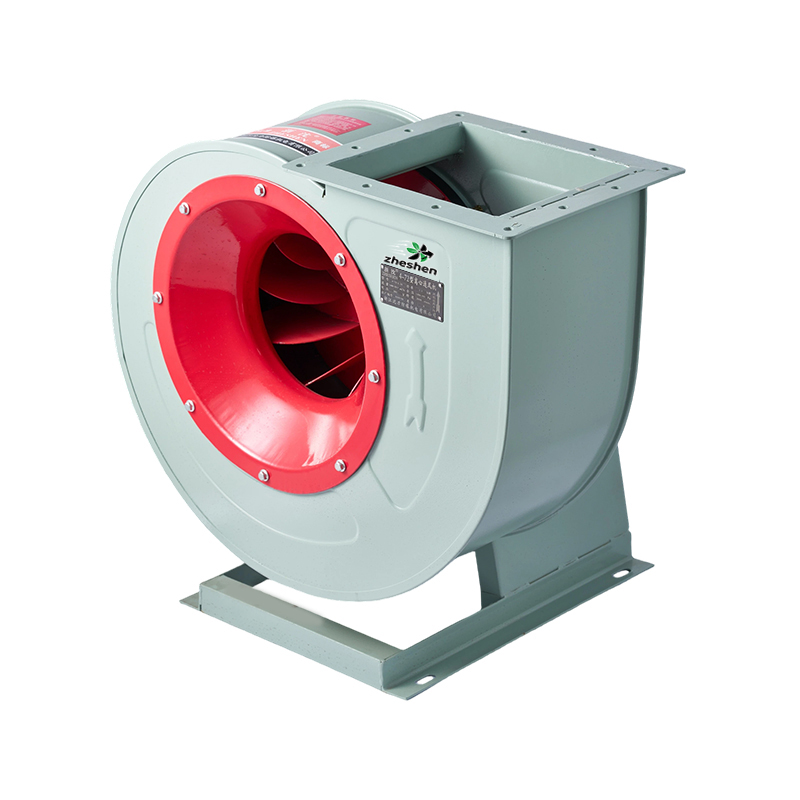
A centrifugal fan ventilator moves air by spinning an impeller inside a housing. Air enters along the impeller axis, is accelerated outward by the blades and leaves through the housing outlet toward ducts or the open room. That directed discharge supports continuous circulation in enclosed workshops, plant rooms and larger open areas when the fan is sized to the space and the path is not blocked.

Consistent airflow improves ventilation conditions by replacing stagnant zones with moving air that can be exhausted or mixed according to the system design. Benefit is not unlimited volume for its own sake; it is steady delivery that matches the ventilation plan. A Centrifugal Ventilator selected for the duty keeps that movement available across normal operating hours rather than only at start-up.

High Static Pressure for Overcoming Airflow Resistance

Many ventilation systems are not free-blowing. Filters, long duct runs, dampers, coils and grilles all resist flow. Centrifugal fan ventilators are widely used where that resistance must be overcome because the impeller and housing combination can develop useful static pressure while still moving the required air volume.

Stable air delivery across connected pathways depends on matching the fan's pressure capability to the calculated system resistance. Undersized pressure capability starves outlets; oversized equipment without proper control wastes energy and may create noise or balance problems. Suitability for ducted and filtered systems is one of the practical reasons centrifugal types appear in industrial and commercial ventilation layouts.

Flexible Applications Across Industrial and Commercial Environments

Centrifugal fan ventilators serve industrial workshops, commercial buildings, HVAC assemblies and dedicated ventilation equipment. Arrangement can be belt-driven or direct-driven; orientation can favour floor mounting, duct mounting or integration inside an air-handling unit. Different configurations accommodate plant-room constraints, outdoor housings and equipment skids.

Adaptability to varying ventilation requirements and working environments comes from that range of builds, not from a single universal unit. Corrosive or dusty airstreams, higher temperatures and cleaner office air each push material and sealing choices in different directions. Application success follows when the airstream and the installation envelope are stated clearly before the fan is fixed.

Reliable Operation for Continuous Air Movement Duties

Impeller, motor and housing must work as one assembly. The impeller must stay balanced and clear of the inlet cone; the motor must deliver torque without overheating under the expected duty; the housing must contain the airstream and support the rotating assembly. Appropriate structural design and component selection support stable operation when bearings, alignment and electrical supply remain within good practice.

Ventilation systems that run for long periods need that kind of mechanical predictability. Scheduled inspection of belts where used, inlet cleanliness and unusual noise or vibration protects continuous service. Reliable air movement is a maintenance partnership with the equipment design, not a claim that no attention is required after installation.

Adaptable Design for Different Ventilation Requirements

Fan size, impeller type, housing shape and motor arrangement can be selected to match airflow and pressure targets. Inlet and outlet orientations can be arranged to fit duct routes and plant-room walls so that transitions stay short and losses stay controlled. That flexibility helps centrifugal fan ventilators meet different airflow and pressure requirements without forcing the building ductwork into awkward geometry.

Centrifugal Fans Custom projects often centre on those layout and duty adjustments—special coatings, spark-resistance considerations, atypical discharge angles or motor enclosures suited to the site. Customisation is useful when standard catalogue orientations cannot serve the room; it still depends on honest duty data and clear installation limits.

Improved Ventilation and Working Environment Outcomes

Continuous circulation helps remove accumulated heat, stale air and airborne particles when the fan is connected to suitable exhaust paths or filtration. Air exchange supports a more comfortable working environment by reducing hot spots and lingering odours, subject to the overall design of supply and extract. Ventilation efficiency and environmental management improve when the fan is part of a coherent system rather than an isolated blower aimed at a doorway.

Results depend on correct placement, adequate make-up air and filter maintenance where filters are fitted. A powerful fan on a blocked grille or a sealed room without relief air will not deliver the intended environment. The contribution of the centrifugal unit is strong, controllable air movement inside a designed system.

Benefits Mapped to System Needs

Benefit System contribution Practical condition
Strong directed airflow Circulation and extract volume Path not obstructed; duty matched to space
Useful static pressure Flow through ducts and filters Resistance calculated; fan curve suitable
Broad application range Workshops, HVAC, commercial plant Materials and drive suit the airstream
Continuous-duty construction Long operating hours Maintenance access; balanced rotating assembly
Configurable layout Fit to ducts and plant rooms Inlet/outlet orientation planned early
Environmental support Heat, odour and particle management Integrated with supply, extract and filtration

Selection and Installation Discipline

Choosing a centrifugal fan ventilator starts with airflow need, system pressure, airstream properties and available space. Mounting must limit vibration transmission into occupied structures; electrical protection must match the motor and site rules. Commissioning should confirm rotation direction, current draw within expectation and that dampers and controls move freely. Centrifugal Fans Suppliers are typically evaluated on whether they support that duty definition and documentation, not only on unit price.

Airflow, Pressure and Flexible Duty in One Fan Type

Centrifugal fan ventilators benefit ventilation projects through strong airflow, capability against duct and filter resistance, flexible use across industrial and commercial settings, construction suited to continuous running, adaptable size and layout options and support for healthier working air when integrated correctly. Zhejiang Shenli Explosion proof Electromechanical Co., Ltd. produces ventilation fans including centrifugal configurations for industrial and commercial applications. Review of airflow targets, system resistance, installation layout and environmental conditions against available fan designs supports selection of a centrifugal fan ventilator suited to efficient, stable air movement.