
 English
  中文简体
中文简体  Français
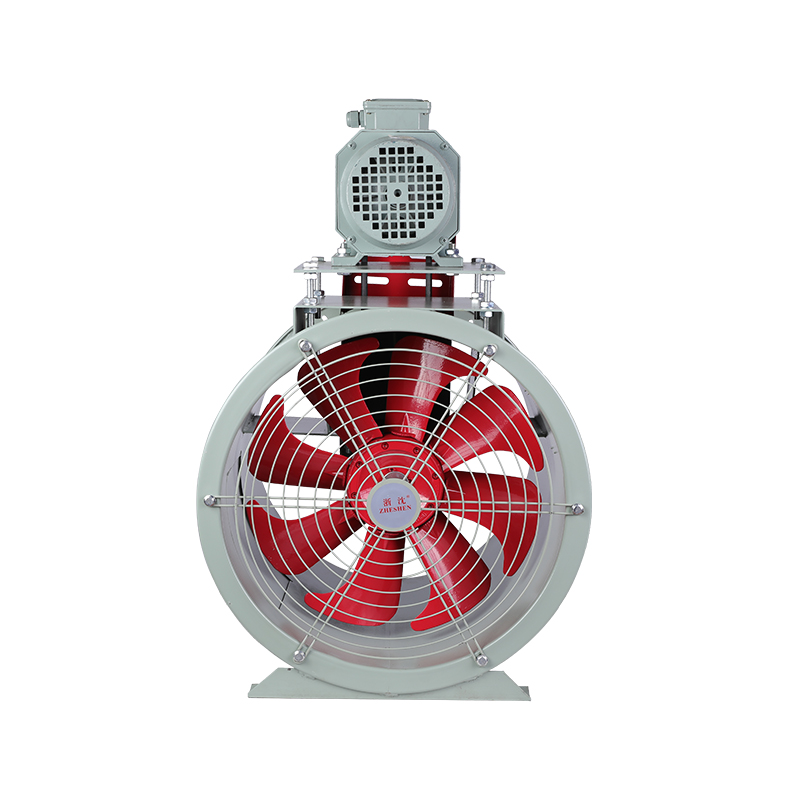
 The Model T40 axial-flow fan is suitable for general ventilation and air exchange in factories, ware...
+ VIEW MORE
How Does a Mobile Industrial Fan Improve Industrial Airflow
Deliver multiple validated explosion-proof fan solutions
Air movement inside industrial environments rarely behaves in a straightforward way. Even when space looks open, airflow often bends, slows down, or splits because of equipment layout, storage systems, and ongoing operational activity. What appears as a single large area is usually a collection of smaller air zones that interact with each other in uneven ways.
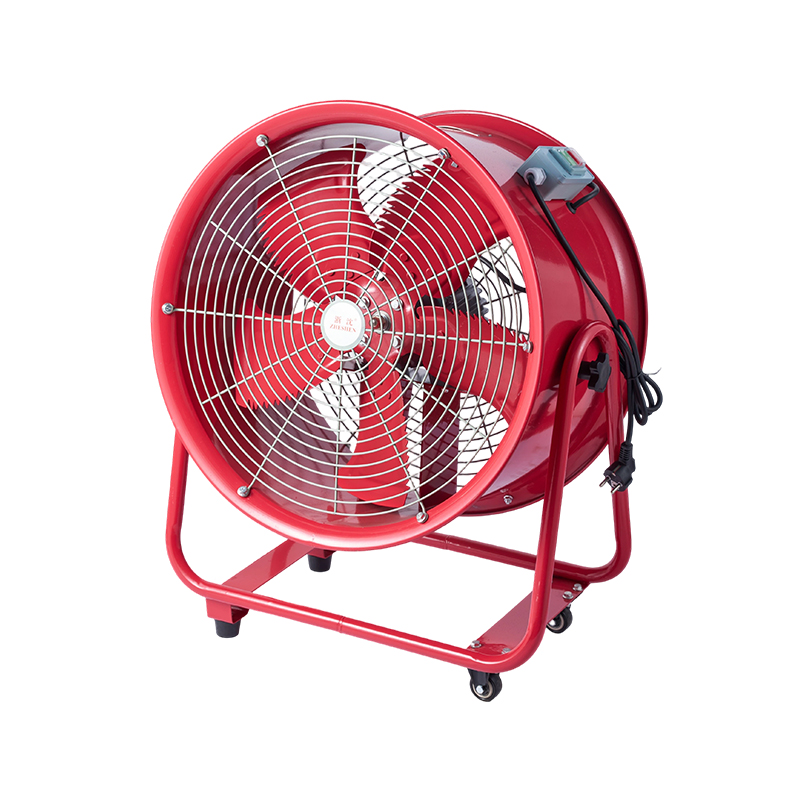
In that context, a Mobile Industrial Fan is not simply treated as a device that "creates wind." It is more often positioned as a tool that helps adjust how air behaves inside a space that is already physically defined. The difference is subtle, but important. One approach focuses on output, the other focuses on interaction with the environment.
Once this shift in perspective is made, questions about airflow distance, positioning, and circulation patterns become more relevant than the device itself.
What is a Mobile Industrial Fan and how does it support airflow improvement in large working spaces
In practical terms, it is used to introduce directed air movement into areas where natural circulation is uneven or interrupted. The "mobile" aspect matters because conditions inside industrial spaces are rarely fixed. Storage layouts change, machinery is relocated, and working zones shift.
Airflow improvement in this context does not always mean stronger wind. It often means reducing still zones where air barely moves.
In real usage, its role tends to fall into a few patterns:
- Pushing air into areas that are visually open but aerodynamically inactive
- Helping air move across wider horizontal distances rather than staying localized
- Supporting general circulation when ceiling or side ventilation is not sufficient for coverage
Interestingly, the effect is not always symmetrical. One side of a space may feel active airflow while another remains relatively calm, depending on structural layout.
Which factors influence the airflow distance and performance of a Mobile Industrial Fan
Airflow distance is often assumed to be a fixed characteristic, but in real environments it behaves more like a variable influenced by surrounding conditions.
A Mobile Industrial Fan interacts with its environment rather than operating independently from it. This is where performance perception often changes.
- Several elements tend to shape the outcome:
- Physical obstruction in the airflow direction
- Open space depth in front of the device
- Air resistance created by temperature layering or enclosed sections
Placement height relative to surrounding objects
Instead of treating these as separate variables, they usually combine. A small obstruction close to the fan can have a similar effect to a larger obstruction placed further away, depending on how air is redirected.
| Environment Condition | Airflow Behavior | Practical Observation |
|---|---|---|
| Wide open space | Air travels with fewer interruptions | Movement feels continuous |
| Partially blocked area | Air splits around objects | Uneven reach across zones |
| Dense equipment layout | Air loses direction early | Localized circulation only |
| Mixed structure space | Air changes path mid flow | Shifting movement patterns |
Airflow is less about strength and more about direction continuity.
How does a Mobile Industrial Fan create air movement patterns in warehouses and factory environments
Air movement inside warehouses rarely follows a straight line. Even when a fan produces directional airflow, the environment reshapes it almost immediately.
In storage areas, shelving structures act like vertical partitions. Air tends to slide along these surfaces, creating indirect routes rather than direct travel. In factory environments, machines introduce irregular spacing, which breaks airflow into segments.
This leads to several recurring behaviors:
- Air moving along long corridors before dispersing
- Circulation loops forming between large stationary objects
- Split airflow zones where direction changes depending on obstacles
- Transitional areas where air feels inconsistent
These patterns are not fixed. A unit placed in a slightly different direction can change how air interacts with nearby structures. That is why small adjustments in orientation sometimes produce noticeable changes in circulation feel, even when the device remains the same.
How to position a Mobile Industrial Fan to reduce airflow blockage and improve coverage efficiency
Positioning is often underestimated, yet it determines how air behaves more than the device itself in many cases. The same unit can produce different circulation outcomes depending on where it is placed and what surrounds it.
Instead of aiming for a single fixed placement rule, it is more practical to think in terms of airflow pathways. The goal is to avoid unnecessary interruption of movement.
Common positioning considerations include:
- Keeping airflow direction aligned with longer open pathways
- Avoiding direct facing toward large solid obstacles
- Leaving space in front of the airflow direction for expansion
- Adjusting angle based on surrounding structure density
When multiple units are used, interaction becomes relevant. If airflow directions oppose each other, circulation may weaken in the middle zone. If they align too closely, airflow may concentrate in one path while leaving other areas less active.
Placement decisions often evolve after observation rather than being finalized in advance. In many facilities, initial positioning is adjusted after real airflow behavior is seen during operation, which reflects the practical nature of a Mobile Industrial Fan in real environments.
Why Mobile Industrial Fans are widely used for temperature balance in industrial facilities
Inside industrial spaces, temperature rarely sits evenly across the whole area. It shifts from one zone to another, often without a clear boundary. You can stand a few steps away and feel a different air condition, even though nothing obvious in the environment has changed.
A Mobile Industrial Fan is usually brought in to reduce that kind of separation in air behavior. It does not really "fix" temperature in a direct way. What it does is keep air from staying still long enough for those differences to build up.
In practice, this often shows up in simple ways. One side of a workshop might feel heavier or less active in terms of air, while another side feels more open. Once air starts moving across these areas, the contrast becomes less noticeable.
Some situations where this is commonly seen:
- Working areas close to heat sources feeling more static
- Higher and lower air layers not mixing well in enclosed rooms
- Open zones behaving differently from corners or blocked sections
The outcome is never identical from one facility to another. It depends heavily on how the space is divided and how air is allowed to pass through it.
How Mobile Industrial Fans can support continuous ventilation needs in production and storage areas
Ventilation in industrial environments is not always about intensity. In many cases, the issue is consistency. Air might move well in one moment, then slow down or settle shortly after, depending on activity and layout changes.
A Mobile Industrial Fan is often used in this kind of setting to keep air from settling for too long. It adds a layer of movement that stays flexible, especially in areas where conditions change during the day.
What tends to matter is not just where it is used, but how long air is allowed to remain still in a given zone.
Common ways it fits into real environments:
- Supporting air movement in storage areas with limited natural circulation
- Adding flow in production zones where equipment interrupts air paths
- Helping reduce still pockets that form between working areas
Ventilation here is less of a fixed system idea and more of an ongoing adjustment. Air behavior shifts depending on how the space is being used at that moment.
How Mobile Industrial Fans can be integrated into industrial ventilation planning for improved airflow control
In many facilities, airflow is not controlled by a single system. It is usually a combination of fixed structures and adjustable elements. Fixed systems provide a general base, but they do not always respond well when the environment changes.
It is often placed into that gap, not to replace existing systems, but to adjust airflow where fixed direction becomes less effective.
Instead of thinking in rigid layout terms, airflow planning tends to work better when it follows zones. Some zones need steady movement, others only need occasional adjustment, and some depend on what is happening nearby.
| Airflow element | Role in space | How it behaves in practice |
|---|---|---|
| Fixed ventilation setup | Provides basic air movement | Stable but limited flexibility |
| Mobile airflow unit | Adjusts direction locally | Can shift with space changes |
| Combined setup | Balances different zones | Behavior changes with layout use |
In real use, the interaction between these elements is not always predictable at first. Adjustments are often made after seeing how air actually moves through the space rather than relying on layout expectations alone.
What maintenance practices help maintain stable performance of a Mobile Industrial Fan over time
Over time, airflow behavior can slowly change without any obvious external reason. In most cases, it is not the environment that changes first, but the condition of the equipment itself.
A Mobile Industrial Fan usually operates in spaces where fine particles or dust are part of normal activity. These materials do not stop the fan from working immediately, but they can gradually influence how air moves through it.
What tends to matter most is not complex servicing, but consistency in keeping the device in a steady operating state.
Common attention points include:
- Keeping airflow surfaces from gradual buildup of dust
- Watching for changes in movement smoothness during operation
- Noticing small shifts in vibration or sound patterns
Dust does not affect all parts equally. Some areas may show little change while others slowly alter airflow feel. That uneven effect is often what makes performance changes harder to notice at the beginning.
Regular observation in real working conditions usually reveals more than isolated checks done at long intervals.
Related Product
-
-
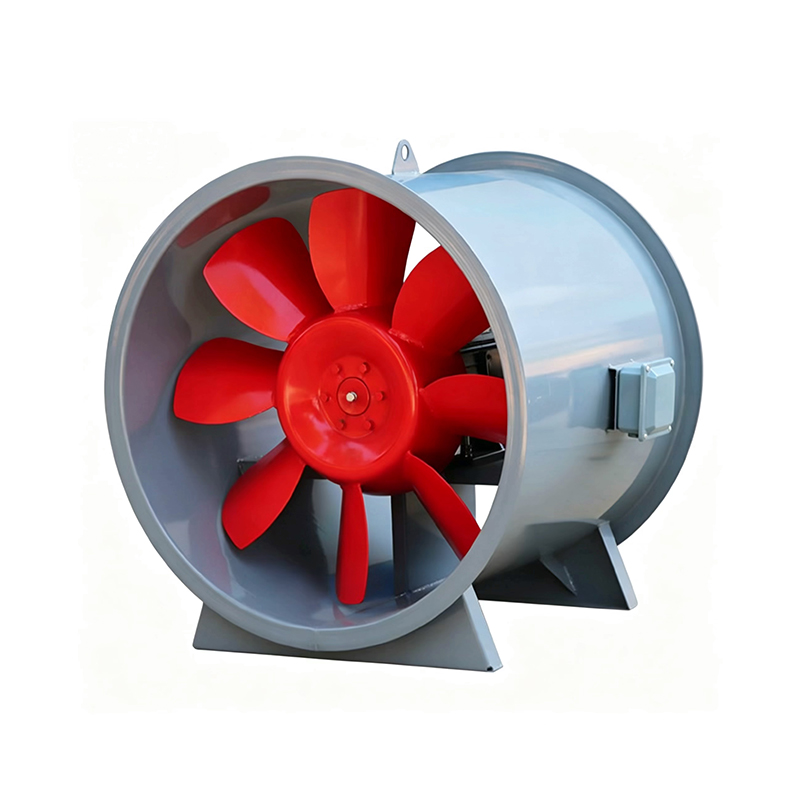
The SWF-I mixed-flow ventilator is a novel type of fan that bridges the gap between axial-flow and c...
+ VIEW MORE -
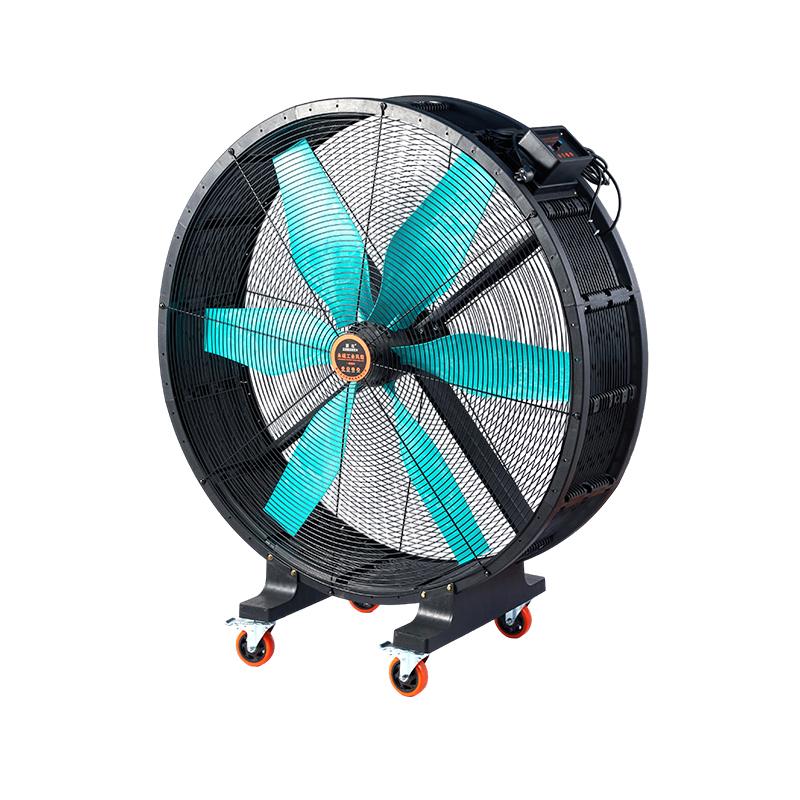
The Magnetic Industrial Fan is a portable, high-efficiency ventilation and cooling device specifical...
+ VIEW MORE -
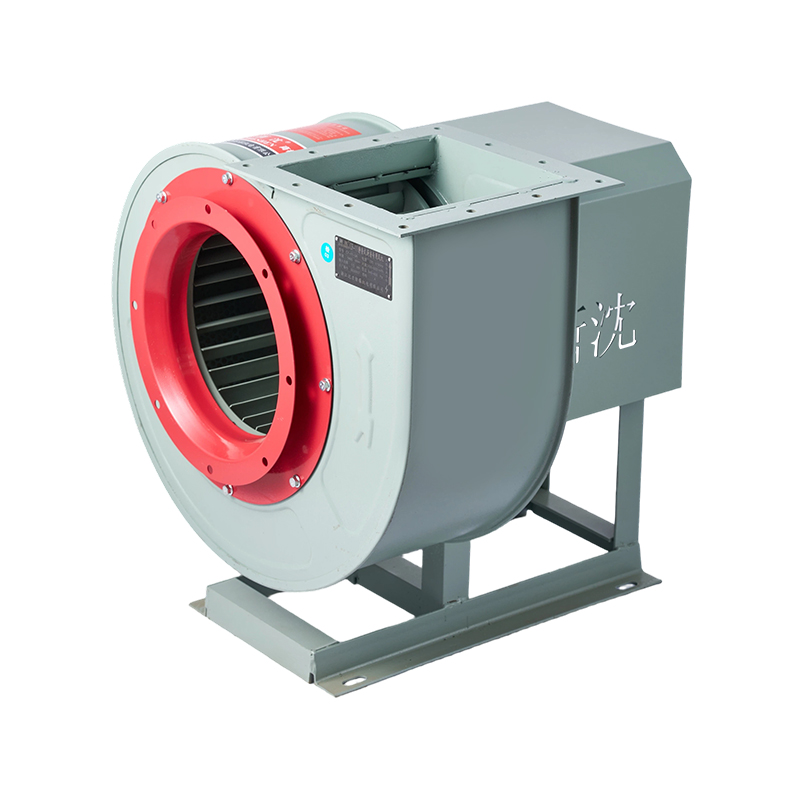
The Model 11-62A Low-Noise Multi-Blade Centrifugal Ventilator is designed and manufactured to meet t...
+ VIEW MORE -
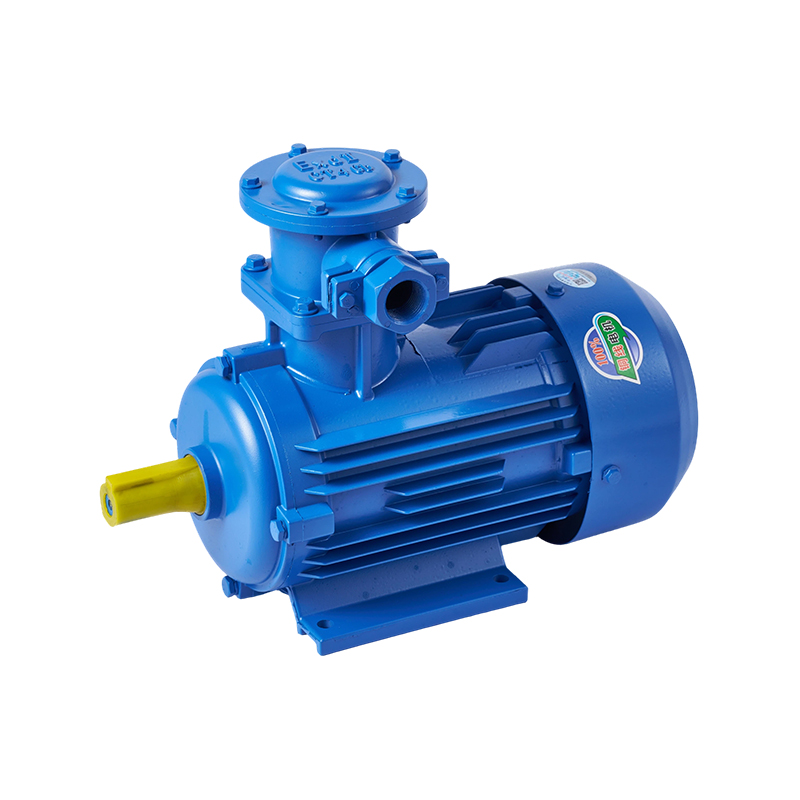
The YBX3 series of high-efficiency, flameproof, three-phase asynchronous motors is a fully enclosed,...
+ VIEW MORE -
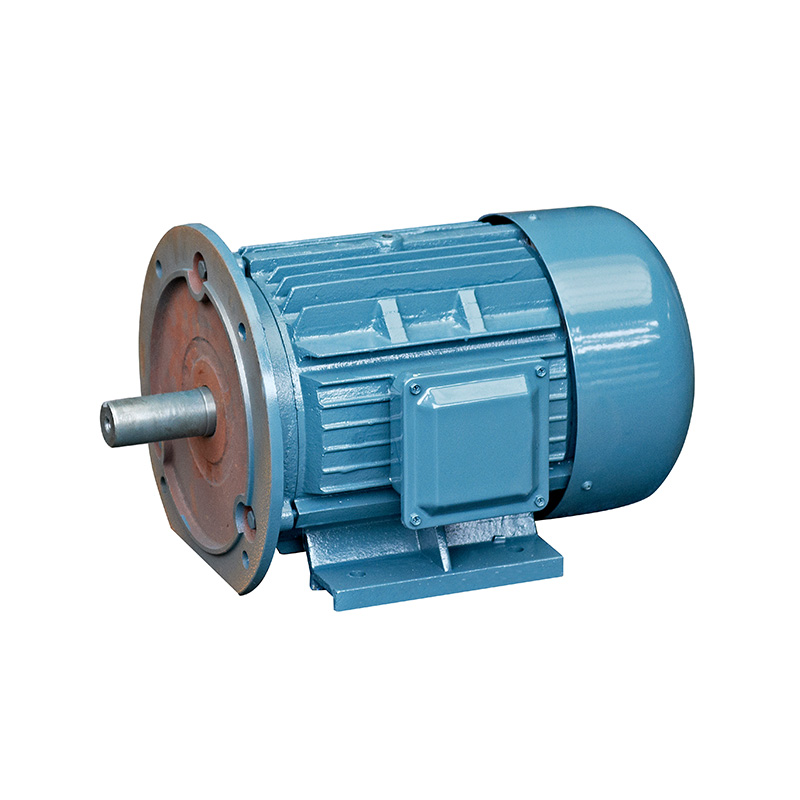
The YE4 series of ultra-high-efficiency three-phase asynchronous motors is a new, upgraded, and high...
+ VIEW MORE
Do you have questions? Do not wait, Let's talk!
Products:
Contact Us
- Tel/Whatsapp:+86-13586259916
- Tel:+86-15825511111
- Email: [email protected]
- Add:Jin'ao Industrial Zone, Shanshi, Daxi Town, Wenling City, Zhejiang Province
Mobile
Copyright ©
Zhejiang Shenli Explosion proof Electromechanical Co., Ltd.
All rights reserved

