
 English
  中文简体
中文简体  Français
 This product series is suitable for use in locations containing explosive gas mixtures classified as...
+ VIEW MORE
What Does an Industrial Fan Factory Do in Airflow Design and Production
Deliver multiple validated explosion-proof fan solutions
In industrial ventilation work, airflow is not treated as a single output point. It behaves more like a result of multiple physical decisions stacked across production, assembly, and spatial interaction. Inside an Industrial Fan Factory, those decisions are not separated by strict boundaries. A change in material handling or structural alignment often shows up later in airflow behavior once the system is in use.
What tends to matter is not only how components are built, but how they behave once air starts moving through them in real environments. That gap between controlled production and uncontrolled space conditions is where most design attention is directed.
What Happens Inside an Industrial Fan Factory From Raw Material to Finished Product
Inside an Industrial Fan Factory, production rarely feels like a single continuous assembly line. It is closer to a chain of controlled transitions, where each stage prepares something that will only become meaningful in the next step.
Raw input materials do not immediately become functional parts. They pass through preparation stages where surface condition, shape stability, and mechanical consistency are adjusted. Some materials are cut early, others are reshaped after initial forming, depending on how they will behave under motion later.
Assembly is not only about putting parts together. It is also where alignment issues start to appear if earlier stages were not consistent. Even small deviations in fit can influence how smoothly rotating parts behave when the system is running.
| Stage | What is actually happening | What engineers tend to watch |
|---|---|---|
| Input preparation | Materials are cleaned and shaped for processing | Surface consistency and stability |
| Forming stage | Components take final mechanical shape | Structural balance after shaping |
| Assembly stage | Moving and fixed parts are combined | Alignment and friction points |
| Final adjustment | System is tested in motion | Smoothness under rotation |
What is noticeable here is that inspection is not only placed at the end. It appears at multiple points, because issues can emerge at different stages depending on how earlier work was handled.
How Industrial Fan Factory Selects Materials That Affect Durability and Long Term Use
Material selection in an Industrial Fan Factory is not treated as a single decision point. It behaves more like a matching process between function and stress conditions. Different parts of a fan system experience different kinds of mechanical pressure, so material choice changes depending on location within the structure.
Some components deal with continuous motion. Others remain static but must hold shape under vibration. These differences lead to layered material strategies rather than a single uniform choice.
Common considerations include:
- How the material reacts under repeated movement
- Whether shape stability holds after extended load
- Interaction between connected parts with different hardness levels
- Exposure to environmental factors during operation
In many cases, combinations are used instead of single-material structures. A rigid base may be paired with lighter moving sections, allowing the system to maintain balance while still supporting motion.
The interesting part is that material behavior is often evaluated indirectly through system response rather than isolated testing. Engineers look at how vibration spreads or how alignment shifts over time, then trace it back to material interaction points.
Why Motor Configuration in Industrial Fan Factory Production Influences Operating Stability
Motor configuration is not only about power output. It affects how motion is introduced into the system and how consistently that motion is maintained when resistance changes.
Within an Industrial Fan Factory, motor placement and integration are usually considered together with structural design. A mismatch between mechanical load and motor response can lead to irregular movement patterns, especially during continuous operation.
Stability is often observed through behavior rather than specifications:
- Whether rotation remains consistent after long operation
- How the system responds when airflow resistance increases
- Whether vibration patterns stay predictable or shift over time
A key point is that instability does not always appear immediately. It may develop gradually as components interact under repeated cycles. This is why motor configuration is rarely treated as an isolated selection step.
Instead, it is adjusted in relation to surrounding structure, mounting position, and expected operational conditions.
Which Design Factors in Industrial Fan Factory Work Affect Airflow Coverage in Real Use
Airflow coverage is not determined by a single component. It emerges from how multiple design elements interact once air begins moving through open space.
In an Industrial Fan Factory, airflow behavior is often studied as a spatial pattern rather than a fixed output. That means attention is placed on how air spreads, slows down, or redirects after leaving the mechanical system.
Several structural influences are commonly involved:
- Curvature and orientation of moving surfaces
- Distance between airflow source and surrounding obstacles
- Shape of housing that guides initial air direction
- Interaction between multiple units operating in shared areas
What makes this complex is that airflow does not remain uniform after leaving the source. It changes based on environment geometry. Walls, storage layouts, and open pathways all influence how air disperses.
Because of this, design work often involves adjusting structure to reduce uneven flow zones rather than trying to force uniform output from a single point.
How Industrial Fan Factory Designs Airflow Systems for Large Industrial Spaces
When airflow systems are scaled into large environments, behavior becomes less predictable. In an Industrial Fan Factory, this is not approached as a simple scaling issue. It is more about how air moves through distance, interruption, and repeated directional change.
Large spaces tend to break airflow into uneven paths. Some areas receive continuous movement, while others sit in slower circulation zones. Design work focuses on reducing that imbalance without forcing artificial uniformity.
Instead of relying on a single directional assumption, airflow planning often considers how air will react after hitting structural elements such as shelving, walls, or open corridors. These interactions reshape the final distribution pattern.
| Space condition | Airflow behavior tendency | Design response direction |
|---|---|---|
| Open wide area | Air spreads quickly but weakens over distance | Reinforce directional guidance |
| Blocked layout | Air breaks into uneven paths | Adjust circulation paths |
| Mixed structures | Flow becomes irregular between zones | Balance multi-direction movement |
| High ceiling space | Air circulation slows vertically | Improve downward movement control |
What matters here is not a fixed formula but adjustment based on how air behaves after contact with the environment.
How Industrial Fan Factory Manages Quality Control and Testing Before Product Delivery
Quality control inside an Industrial Fan Factory is less about a final checkpoint and more about repeated observation across different stages. Issues rarely appear in a single obvious form. They tend to show as small irregularities in movement, sound, or balance.
Before delivery, systems are usually checked under motion conditions rather than static inspection. This helps reveal mismatches that only appear when components interact dynamically.
Common focus areas include:
- Whether moving parts maintain stable rotation under continuous operation
- Whether vibration patterns remain consistent across cycles
- Whether assembly alignment holds after repeated movement
- Whether airflow direction stays stable under load changes
Testing is not treated as an isolated step. It is often repeated after adjustments, especially when minor corrections are made in earlier stages of production. The goal is not only to confirm function but to observe whether small deviations accumulate or remain stable over time.
What Installation Planning Methods Industrial Fan Factory Uses for Warehouse Air Distribution
Installation planning changes the role of a finished unit from a mechanical product into part of a spatial system. In warehouse environments, airflow does not depend only on device output. It depends heavily on placement logic.
In an Industrial Fan Factory context, installation planning is often discussed in relation to spatial geometry rather than fixed positioning rules. Small changes in height or spacing can alter how air moves between open zones and storage areas.
Instead of focusing on uniform distribution, planning tends to address how to reduce stagnant areas where air movement becomes weak. Placement decisions are often adjusted after observing how airflow behaves in the actual environment rather than relying only on initial layout assumptions.
Key considerations include:
- Distance between units and structural obstacles
- Direction alignment between multiple airflow sources
- Vertical placement relative to open circulation paths
- Interaction between overlapping airflow zones
The result is usually a layered airflow structure rather than a single continuous stream.
Tips Industrial Fan Factory Uses to Support Stable Performance in Continuous Operation
Continuous operation introduces conditions that are not visible during short testing phases. Over time, mechanical interaction shifts slightly due to vibration, temperature change, and material response under repeated motion.
Within an Industrial Fan Factory environment, long term stability is often approached through gradual adjustment rather than major intervention. Small changes in alignment or maintenance timing can influence overall consistency.
Common practical approaches include:
- Monitoring vibration patterns instead of only visual inspection
- Checking alignment stability after extended operation cycles
- Observing changes in noise behavior as an early indicator of imbalance
- Adjusting maintenance timing based on usage intensity rather than fixed intervals
These steps are not isolated actions. They form a feedback loop where observed behavior informs minor adjustments, which then influence future operation conditions.
Stability in continuous operation is therefore less about maintaining a fixed state and more about managing slow shifts before they become noticeable disruptions.
Related Product
-
-
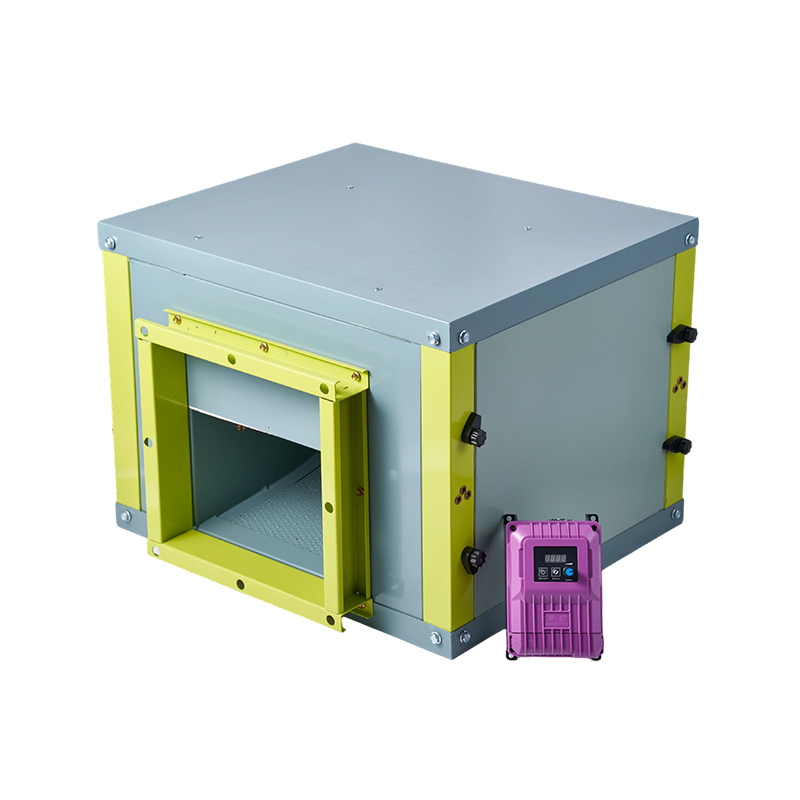
The air cabinet features a clean and elegant exterior design; all components of the cabinet body are...
+ VIEW MORE -
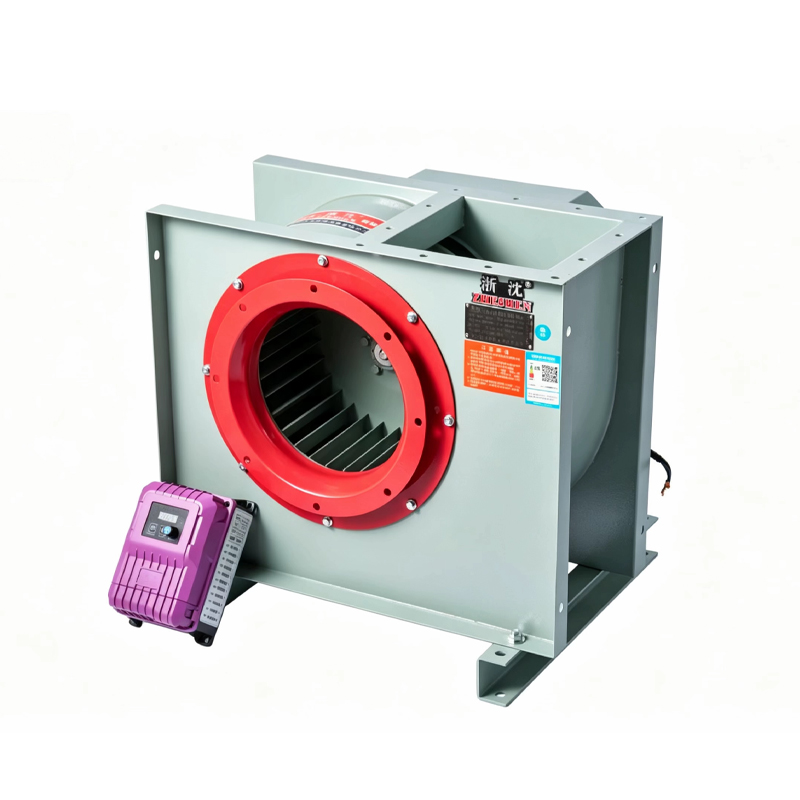
The YC Series Permanent Magnet Variable Frequency Kitchen Fan was designed and manufactured by our c...
+ VIEW MORE -
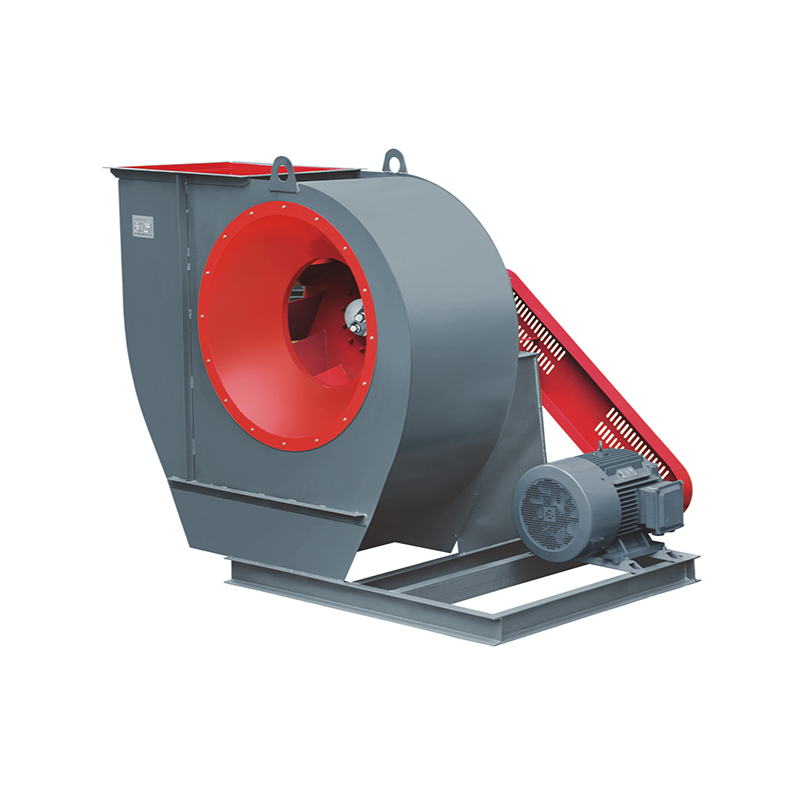
The Model 4-72C centrifugal ventilator is designed to convey air and other gases that are non-flamma...
+ VIEW MORE -
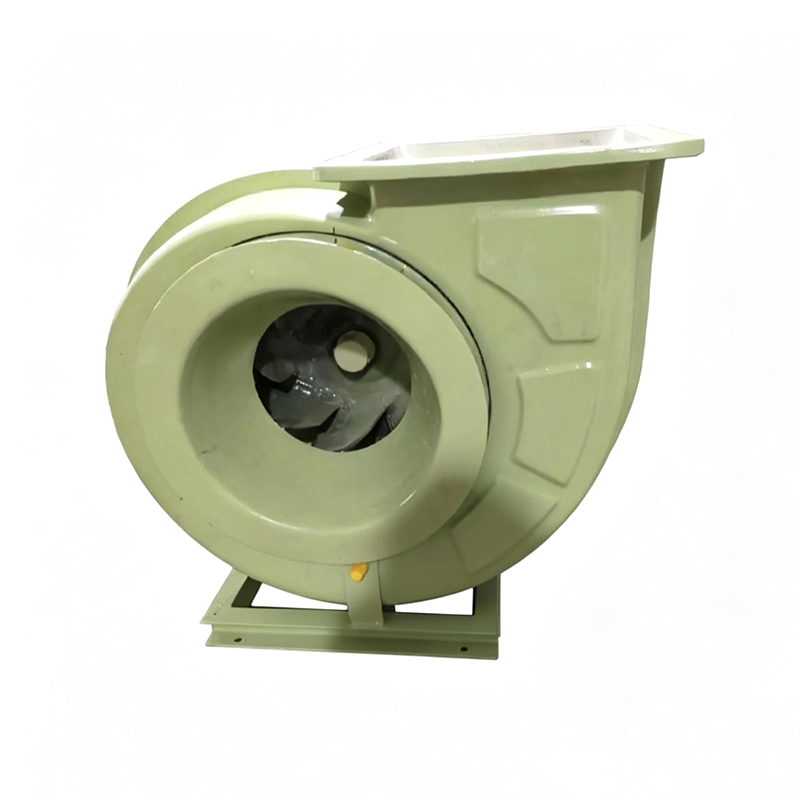
The Model 4-72 series plastic centrifugal ventilators manufactured by our factory are meticulously c...
+ VIEW MORE -
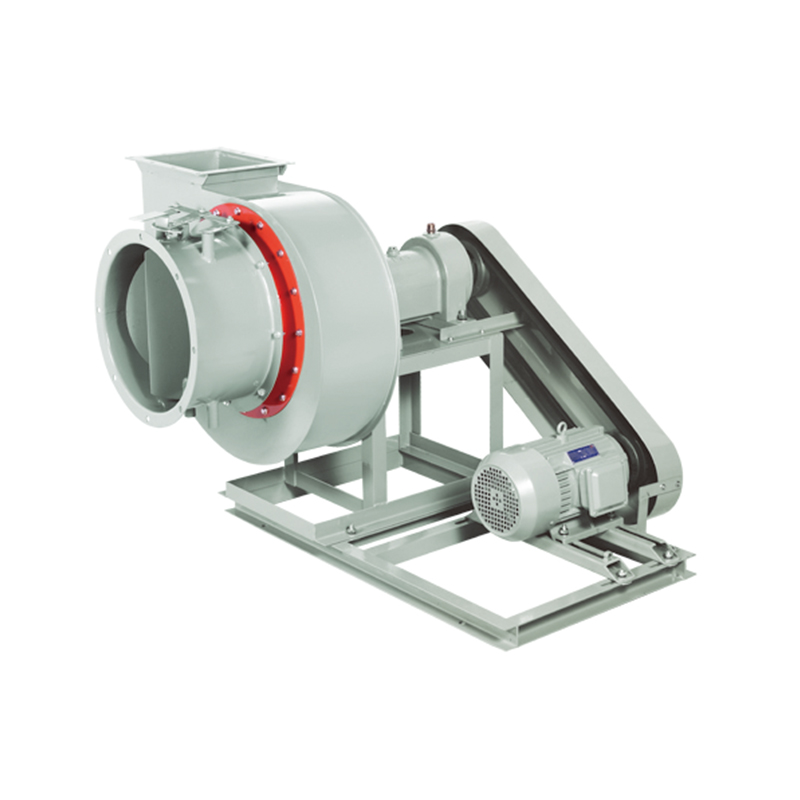
The Model Y5-47 boiler centrifugal induced-draft fan features low noise levels, a simple structure, ...
+ VIEW MORE
Do you have questions? Do not wait, Let's talk!
Products:
Contact Us
- Tel/Whatsapp:+86-13586259916
- Tel:+86-15825511111
- Email: [email protected]
- Add:Jin'ao Industrial Zone, Shanshi, Daxi Town, Wenling City, Zhejiang Province
Mobile
Copyright ©
Zhejiang Shenli Explosion proof Electromechanical Co., Ltd.
All rights reserved

